Tree Fertilization & Deep Root Feeding in DeLand
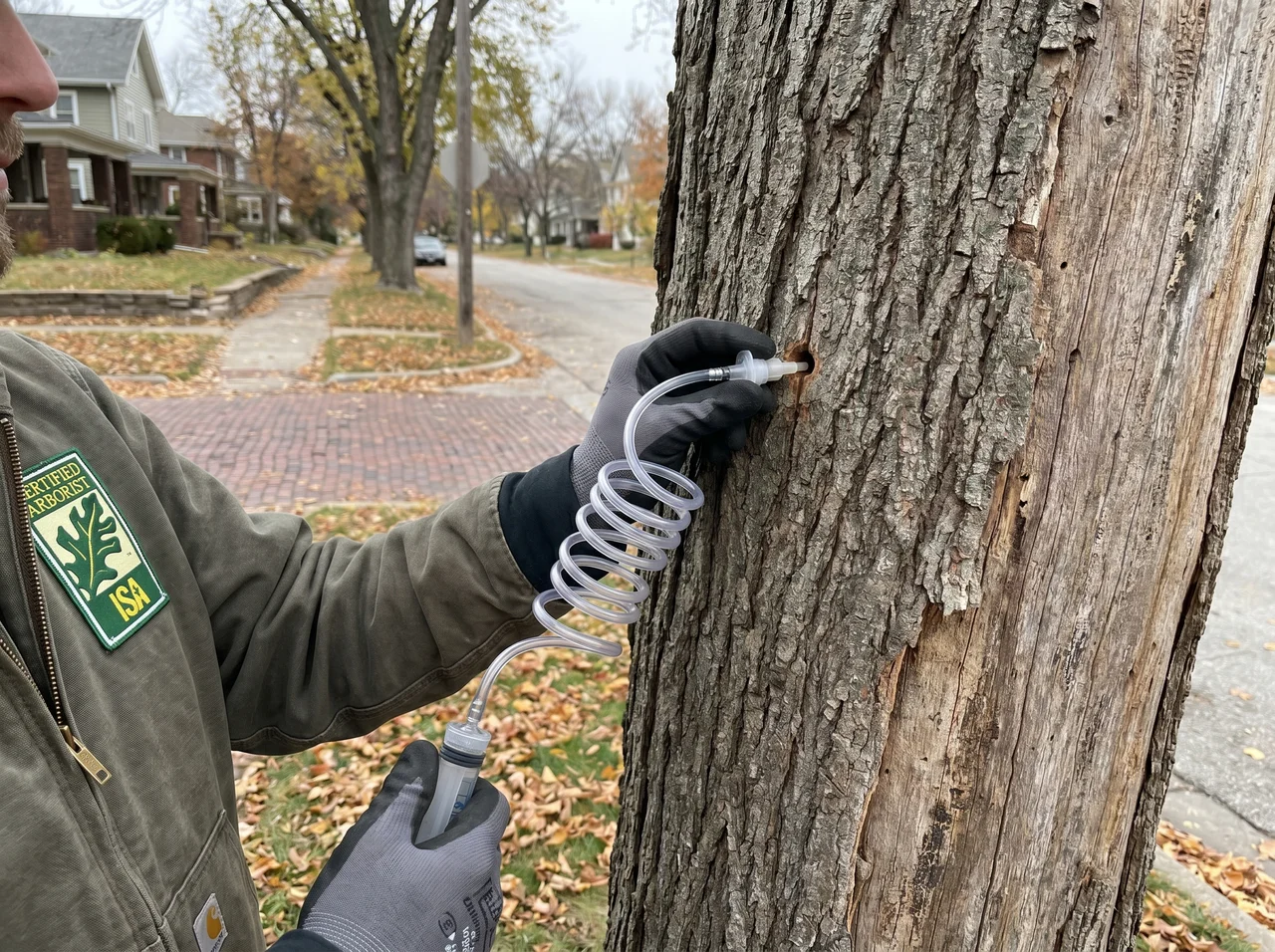
If you need tree fertilization in DeLand, deep root feeding is what most trees actually need. Not surface lawn fertilizer (which feeds grass roots, not tree roots). We inject custom-blended fertilizer 8-12 inches into the root zone, where the tree can actually use it. Soil tests included on first visit.
What's Included
- Free soil pH and nutrient test on first visit
- Custom fertilizer blend matched to soil deficiencies + species needs
- Pressure-injected at 8-12 inch depth across the root zone
- Drip-line coverage (root zone extends well beyond the canopy)
- Treatment timing matched to species (live oaks vs. sabal palms vs. pines)
- Annual or biannual service plans for high-value trees
Common Signs You Need This Service
- Pale or yellow-green leaves during the growing season (chlorosis)
- Smaller-than-normal leaves
- Dieback at branch tips
- Slow recovery from drought, storm, or pest damage
- Trees in heavily compacted lawns or near new construction
- Nutrient-stressed soil confirmed by test
Our Process
Soil Test
Free soil sample from the root zone. Tests pH and major nutrient levels. Results in 5-7 business days.
Custom Blend
Fertilizer blended to match the deficiencies your soil test shows + your tree species. Generic NPK isn't the right answer.
Deep Root Injection
Pressure-injected at 8-12 inches across the drip line. Bypasses lawn grass and reaches actual tree roots.
Annual Plan
Most trees benefit from annual or biannual feeding. We schedule the next visit at the right season for your species.
Feeding Programs
| Service | When | Typical Cost | Best For |
|---|---|---|---|
| Single deep root feed | One-time, fall preferred | $150 – $400 per tree | Stressed trees, post-construction |
| Annual maintenance | Once per year, fall | $120 – $300 per tree | Most established trees |
| Biannual program | Spring + fall | $200 – $500 per year | High-value specimens, recovering trees |
| Soil + decompaction combo | Once + recheck | $400 – $1,200 | Compacted soil, post-construction |
Pricing Factors
- Tree size (drip-line area determines injection points)
- Species (some need micronutrient correction, costs more)
- Number of trees in the visit
- Whether soil tests are included (first visit free, follow-ups extra)
- Application timing (some species need specific seasonal windows)
Estimate range: Single deep root feeding: $150 – $400 per tree. Annual programs: $120 – $300 per tree per year. Multi-tree properties get bundle pricing.
DeLand-Specific Context
DeLand soil tends to be sandy with rapid drainage and naturally low organic matter and cation exchange capacity. Both of which mean nutrients (especially nitrogen, potassium, and magnesium) leach quickly. Many "yellow leaves" complaints we get on sabal palms, queen palms, and southern magnolias trace to magnesium and potassium deficiency. Fixable with a deep root feed that includes Mg and K, per University of Florida IFAS guidance. Pines, by contrast, prefer slightly acidic soil and benefit from sulfur amendments where alkaline irrigation water has shifted pH. One-size-fits-all "tree food" misses these differences.
Why Choose Arborist Tree Experts for Tree Fertilization & Deep Root Feeding
Three things every tree-service buyer in DeLand should expect. And most don't get.
Soil-Tested, Not Guessed
Free soil test on the first visit. Generic "NPK fertilizer" wastes money on nutrients your soil already has and misses what's actually deficient. Potassium and magnesium deficiency in sabal palms is a great example. The palm needs K and Mg, not nitrogen.
Free first-visit soil testDeep Root Injection, Not Surface
Surface-applied lawn fertilizer feeds grass roots in the top 2 inches of soil. Tree roots are 8-18 inches deep. Pressure-injection at 8-12 inches reaches the actual tree roots and doesn't feed competing turf.
8-12 inch root-zone injectionSpecies-Matched Timing
Live oaks fertilize best in fall after leaf hardening. Sabal palms prefer 4 applications per year of slow-release palm-specific blends. Pines take 1-2 lighter feedings. We schedule based on species, not on whatever season we happen to be in.
Species-specific schedulingWhat DeLand Homeowners Say
"A massive laurel oak split during Hurricane Ian and dropped a scaffold across our driveway. They had a crew there in two hours, dealt directly with our adjuster, and our yard was clean by the next day. Calm, professional, and fairly priced."Sarah K.Victoria Park
"Got three quotes for removing two big pines too close to the house. They weren't the cheapest, but they were the only ones who showed me actual insurance certificates and answered every technical question. Worth every dollar."Mike R.Deltona
"Hired them to do hurricane-prep pruning on four live oaks before the season. They explained why they wouldn't "top" the trees and what proper pruning actually looks like. We didn't lose a single limb when Nicole came through."Linda T.Sanford
Frequently Asked Questions
Why not just use lawn fertilizer?
Lawn fertilizer is broadcast on the surface and stays in the top 1-2 inches. Where grass roots are. Tree roots are 8-18 inches deep. Most surface fertilizer feeds your grass and never reaches the tree.
How often should trees be fertilized?
Most established trees benefit from annual feeding (fall is best). Sabal and queen palms benefit from 4 lighter applications per year of palm-specific fertilizer. Stressed trees and high-value specimens often do better on a biannual program (spring + fall).
My sabal palm's fronds are yellowing with frizzy tips. Fertilizer fix?
That pattern is potassium deficiency, very common on sabal and queen palms in Florida's sandy soils. Yes. A palm-specific deep root feed with slow-release potassium and magnesium usually corrects it within 1-2 growing seasons.
Is the soil test really included?
On your first visit, yes. Follow-up tests are typically $40 – $80 if you want them; most trees only need a fresh test every 3-5 years.
Will this help my dying tree recover?
For nutrient-stressed trees that are otherwise healthy, often yes. Significant recovery in one to two seasons. For trees with disease (laurel wilt, lethal bronzing, oak wilt), root failure, or major structural damage, fertilizer doesn't fix the underlying problem.
You Might Also Need
Crown Reduction & Restoration
Proper height/spread reduction (not topping) and restoration of trees previously topped.
Learn more →Hurricane Tree Preparation
Pre-storm pruning that reduces wind load and prevents the limbs that come through your roof.
Learn more →Storm Damage Cleanup
Post-storm debris removal, fallen-tree cleanup, and full property restoration.
Learn more →Ready For Your Free Tree Fertilization & Deep Root Feeding Estimate?
ISA-certified arborists, $2M insured, response within 2 business hours.